
Moving to Madrid: A Relocation Guide for Expats
Moving to Madrid? Discover where to live, how to register, find accommodation, access healthcare and settle into life in Madrid as an expat.
How to move to Madrid
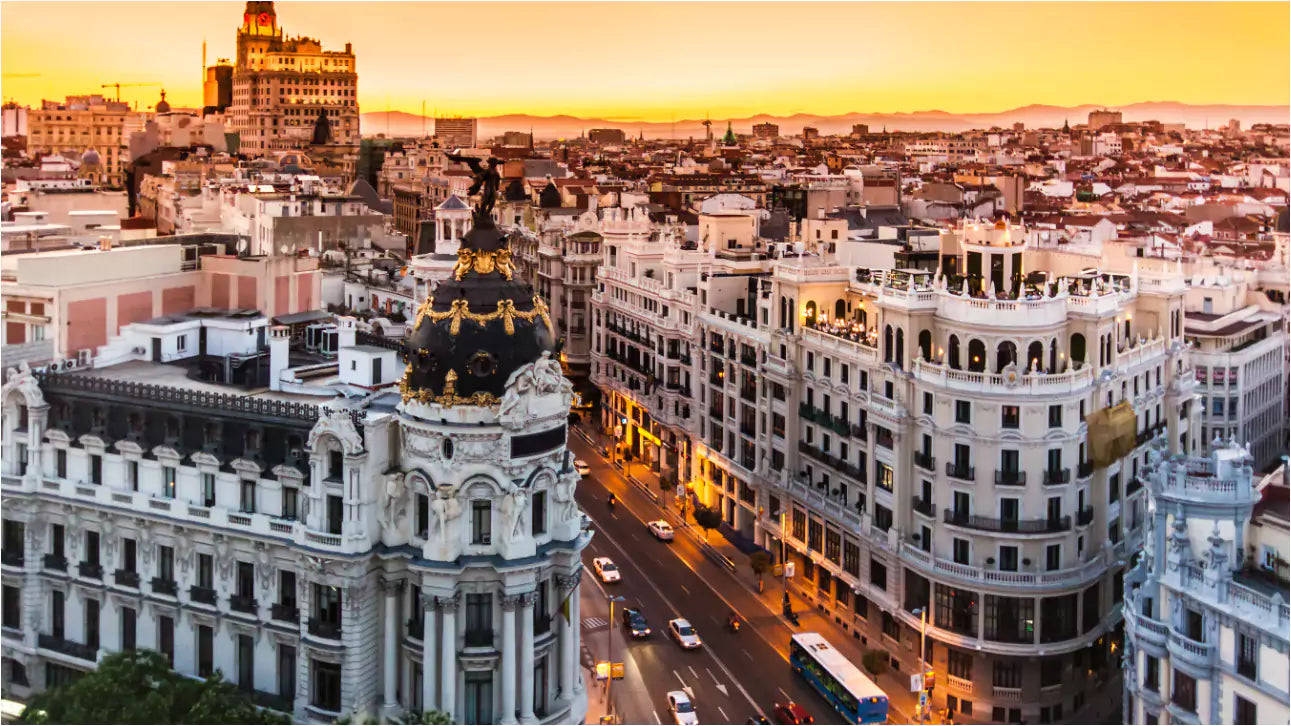
Madrid is Spain’s capital and one of the country’s main centres for business, finance, technology, culture and international companies. For expats, it combines a strong professional environment with a vibrant social life, excellent transport connections and a wide choice of neighbourhoods and schools.
If you are planning to move to Madrid, however, there is more to consider than simply finding an apartment. Understanding the city, its administrative procedures and the practicalities of everyday life can make the transition considerably easier.
Before you move to Madrid
Your relocation process will depend largely on your nationality and reason for moving. Depending on your circumstances, you may need to arrange a visa or residence permit, NIE, employment documentation and other immigration formalities before arriving in Spain.
It is also essential to plan the practical side of your move in advance: accommodation, schools, healthcare, banking, insurance and other essential services.
For employees relocating to Madrid through their company, additional immigration and employment requirements may apply.
Registering your residence in Madrid
Once you have established your home in Madrid, one of the key local procedures is registering with the Padrón Municipal, the city’s official register of residents.
The Ayuntamiento de Madrid (or city council) requires people who live in the city to register, with documentation proving their identity and use of the property. The requirements can vary depending on your circumstances and type of accommodation. (Sede Electrónica)
For international residents, completing this step correctly can also make other administrative processes easier as you begin settling into Madrid.
Finding the right home in Madrid
Madrid’s size is one of its advantages, and one of its challenges. The city offers everything from lively central districts to quieter residential areas, while the wider metropolitan area provides even more options for those willing to commute.
But finding a home in Madrid can be expensive. In August 2026, the average rent in Madrid reached 23.3€ per square meter per month, the highest level among Spanish cities. To put that into perspective, the average in Murcia was 9.9€ sqm, meaning rental prices in Madrid were more than twice as high.
Strong demand, limited availability in many areas and increasingly complex rental requirements can make the search particularly challenging for people arriving from abroad. Having the right documentation and understanding the local market can make a significant difference.
Choosing a home in Madrid is therefore not simply about finding an attractive property. Your workplace, commute, budget, family situation, schools and preferred lifestyle should all play a role in deciding where to live.
Where should expats live in Madrid?
Madrid is made up of very different neighbourhoods, each with its own character.
Areas such as Salamanca and Chamberí are popular with professionals and international residents looking for central locations and established services. Retiro combines residential streets with access to one of the city’s best-known green spaces, while Centro, Malasaña and La Latina offer a more lively urban environment.
For families or those looking for more space, neighbourhoods outside the central districts (also towns within the Madrid metropolitan area) can provide an alternative, particularly when good transport connections are available.
The best area to live in Madrid ultimately depends on how you plan to spend your everyday life.
Getting around Madrid
Transport is a major advantage when living in Madrid. The city’s extensive Metro (or subway) network, bus and commuter rail network connects the central districts with residential areas across the capital and surrounding municipalities.
This means that you do not necessarily need to live close to your workplace. When choosing a home, it can be more useful to think in terms of door-to-door commuting time rather than simply distance on a map.
For international professionals and families, understanding Madrid’s transport network can significantly expand the range of suitable areas to consider.
Healthcare and everyday services
Once you are settled, you will need to arrange access to healthcare according to your residency and insurance situation.
Eligible residents can access Madrid’s public healthcare system and obtain a Tarjeta Sanitaria Individual (or healthcare card), which identifies them within the system and links them to their assigned healthcare services. Requirements vary according to each person’s circumstances.
You may also need to set up a Spanish bank account, utilities, internet and mobile services, insurance and other everyday arrangements.
Moving to Madrid with children
Madrid is a popular destination for international families, with a broad selection of public, private, bilingual and international schools.
For families relocating from abroad, school selection should ideally happen alongside the property search, depending on the month of the year you’re moving. Location, school availability and commuting times can have a significant impact on your choice of neighbourhood.
Beyond education, Madrid offers extensive parks, cultural attractions, sports facilities and activities for children, making it possible for families to build a routine relatively quickly after arriving.
Experiencing life in Madrid
Madrid has a distinctly social and energetic character. Life often revolves around neighbourhood bars and restaurants, terraces, parks, cultural events and spending time with friends and family.
New arrivals may also notice differences in everyday routines, including later meal times and a strong culture of socialising outside the home. From weekend markets and local fiestas to museums, concerts and sporting events, there is plenty to discover beyond the traditional expat experience.
Understanding these local habits can be an important part of feeling at home in Madrid.
How can a relocation company help?
Moving to Madrid from another country can mean coordinating immigration, accommodation, schools and practical arrangements at the same time, sometimes before you have even arrived.
A relocation company can help manage these different elements, providing local knowledge and practical support throughout the process.
BRS Global Mobility supports individuals, families and companies relocating to Madrid and other destinations across Spain. From finding a home and navigating local procedures to school search and settling-in services, our team helps make international relocation simpler and more efficient.
Planning to move to Madrid? Contact BRS Global Mobility to find out how we can support your relocation.
Madrid is Spain’s capital and one of the country’s main centres for business, finance, technology, culture and international companies. For expats, it combines a strong professional environment with a vibrant social life, excellent transport connections and a wide choice of neighbourhoods and schools.